Many traditional yoga gurus called Shoulderstand the mother, or Queen  of yoga postures, and claimed that yoga practice is ‘incomplete’ without shoulderstand. I often see this pose being taught in general beginner classes as it seems to be the most accessible inversion in terms of balance. But even if you CAN do it, it doesn’t mean you SHOULD do it. If students do Shoulderstand with their shoulders and head flat on the floor but attempt to lift their spine and chest into a completely vertical position, pressing their breastbone strongly toward their chin, then they will force their neck into extreme flexion, using their entire body weight to apply pressure. A few people may be able to do this safely, but most people’s necks simply cannot bend this far without causing subtle or serious damage- strain on the muscles, ligaments, discs of the neck. If you have any shoulder or neck injury, you should not be doing this pose at all. However, I still teach Shoulderstand to healthy regular practitioners.
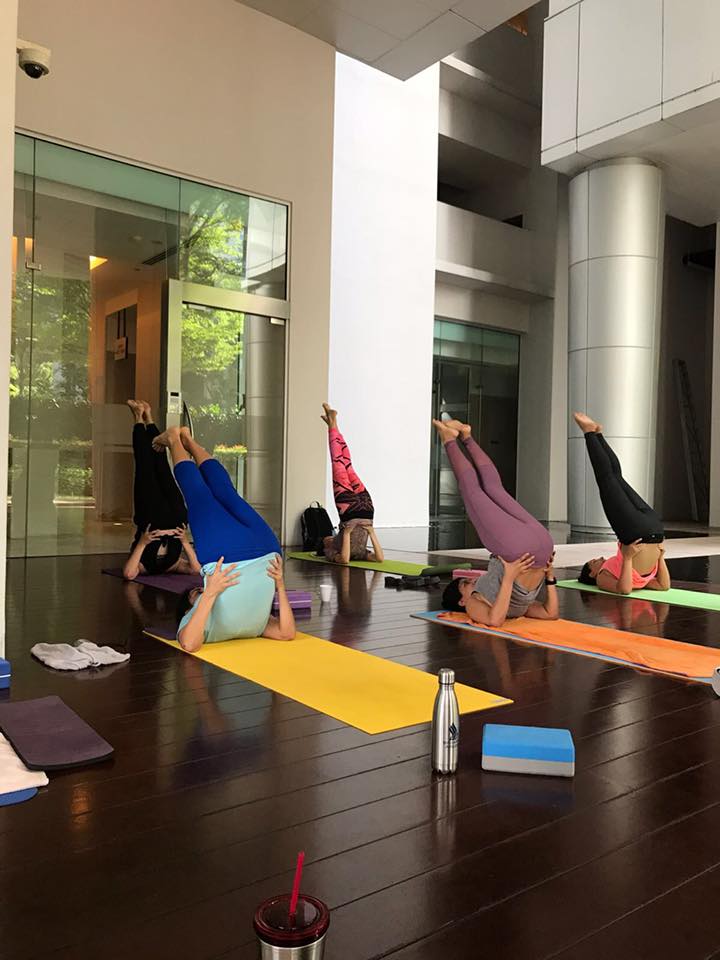
  The pose does have verifiable benefits, the main one is reversing the downward pull of gravity on our bodies. In Shoulderstand your spinal musculature has to work in a different way to maintain equilibrium, which strengthens those structures and also stretches your upper back muscles nicely. When I teach the pose, I instruct the students to rest their weight on the back part of their shoulders and upper arms and tilt their upper spine and chest diagonally away from their head, then they can balance comfortably without putting pressure on the neck. Weaker students can replace Half Shoulderstand with Viparita Karani- Legs Up the Wall, elevating their hips with bolsters, blankets or a block. Some teachers instruct Shoulderstand using blanket- stacking method under the shoulders but this is not my favourite method for 2 reasons- it is simply not practical in large vinyasa classes and even if you align the blankets correctly I feel that it can actually increase pressure in the lower cervical spine as it focuses the flexion of the cervical spine onto the C5 and C6 vertebrae.
  To sum up, my personal opinion- you can still practice Shoulderstand safely but avoid bringing your body fully vertical if you are doing it without blankets ‘flat on the floor’ to take the pressure off the neck. Try to warm up neck and open the shoulders first, do not hold the pose for longer than 3-5 minutes ( even 2 minutes is fine) and enjoy your safe healthy practice!

Leave a Reply