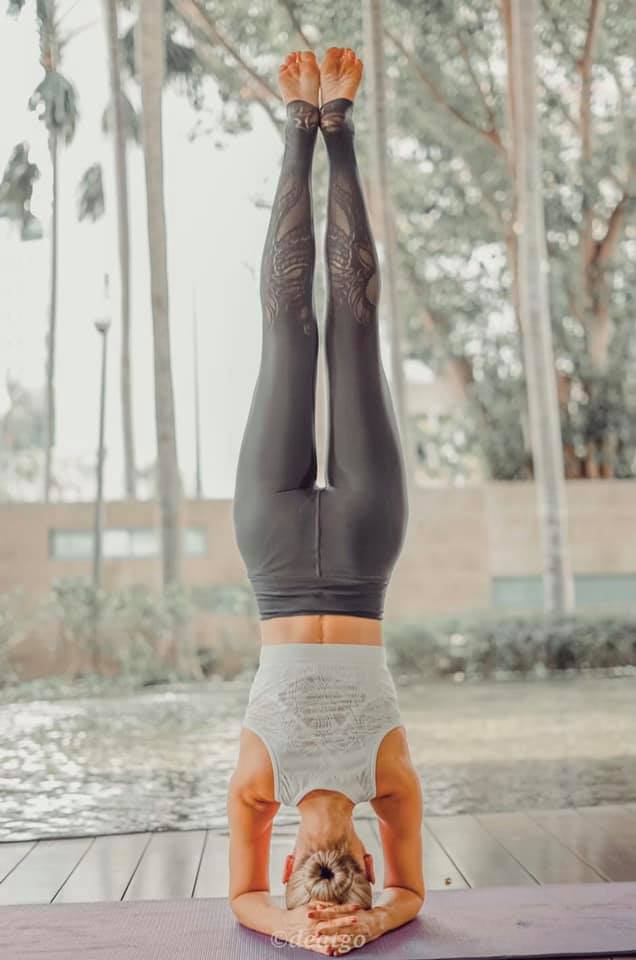
SIRSASANA (Headstand)  can be a refreshing and energising inversion which builds strength in the upper body and core when practiced consistently. Long ago, I stopped teaching Sirsasana in large public classes due to uncertainty around its safety. I do, however, practice it regularly myself and teach it in private 1-to-1 classes to those who are keen and ready. Lately the King of asanas has been criticised widely for exposing the head and neck to weight that could cause injury.
  Indeed, Headstand should be avoided if you have serious degenerative disc issues, structural imbalances in the spine and neck and shoulder injury or weakness. I do believe that a certain amount of weight on the head and neck can be safe in fit individuals, combined with a slow and controlled entry technique. On the flip side, an uncontrolled kick up without shoulder and core engagement can put the neck at risk for strains, fractures and neurological complications. The weight distribution between head and arms is crucial, and beginners need to put more weight into their arms and shoulders to reduce the loading on the head and neck. Again, weight distribution can be tricky due to the differences in individual anatomy- for example, the specific proportions between the length of upper arm bones and a head with a neck. A good teacher is able to judge if you are ready for headstand and offer modifications. If you really want to master the headstand, do it slowly but regularly, keep your neck in neutral position upside down and push more weight through your arms and shoulders so that your head feels light, almost lifted. And remember- you don’t have to stay in Headstand for too long if it feels uncomfortable. 3-5 breaths is fine, and you can slowly build it up to 10 breaths or more.
Leave a Reply