Forward folds are known for their ability to relieve stress and tension, stretch the back, shoulders and hamstrings, improve digestion and many more. However, in my teaching I observe that only 1 or 2 students out of 10 find seated forward bends easy and accessible and can benefit from them without any modifications, and the rest need some serious guidance to do them safely.
Let’s see what happens to the spine when you fold forward from seated position.
When you round your spine forward, the front edges of the veterbrae move apart and and back edges move together, and the discs get wedged in a posterior position. If your spinal structures, muscles and ligaments are in good health, that might not be a problem for you. But for an average person with some tightness in hips and hamstrings, the situation is a bit different. As you start to go into forward bend, you are encouraged to tip your pelvis forward, however, tight hamstrings act as a brake to stop any forward movement of the pelvis. And if the pelvis stops tipping, how do you go deeper into forward fold? You do it by forward folding your vertebrae. The mildest negative consequence of this can be strain of the muscles in the lower back. But repeated effort to go deeper into seated forward fold by pulling strongly with the hands or a strap over the feet can potentially result in discs bulging into dangerous direction towards the nerves in the spinal canal, causing back pain and even ruptured discs.
That’s why it’s so important not to force seated forward bends, especially if you are tight- you will hurt your back before you access proper hamstring stretch.
Modifications
Beginners might not go far forward in the forward bend- their forward fold will look more like sitting up straight. Most students will need to elevate their hips by sitting on a folded blanket, use the strap and maybe even put a folded blanket or a bolster under the knee. When you start going forward, you need to keep your front torso long and maintain neutrality in the lower back instead of forcefully rounding it forward. Belly button, ribs and chest come forward and touch the thigh/ the floor first and the head comes last.
With caution and modifications, most people can benefit from seated forward bends.
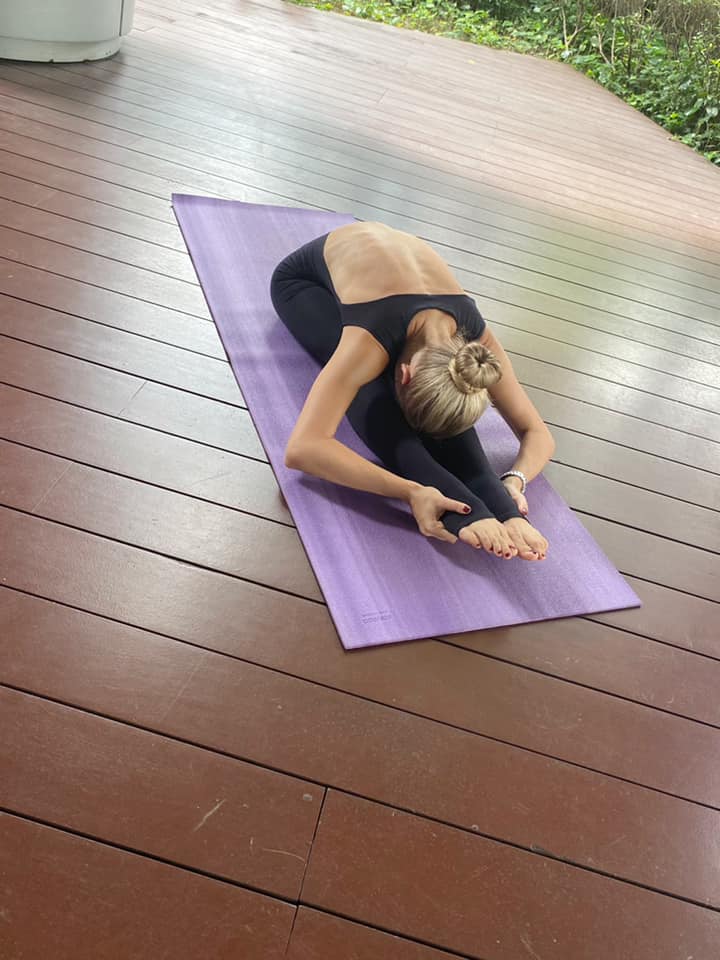
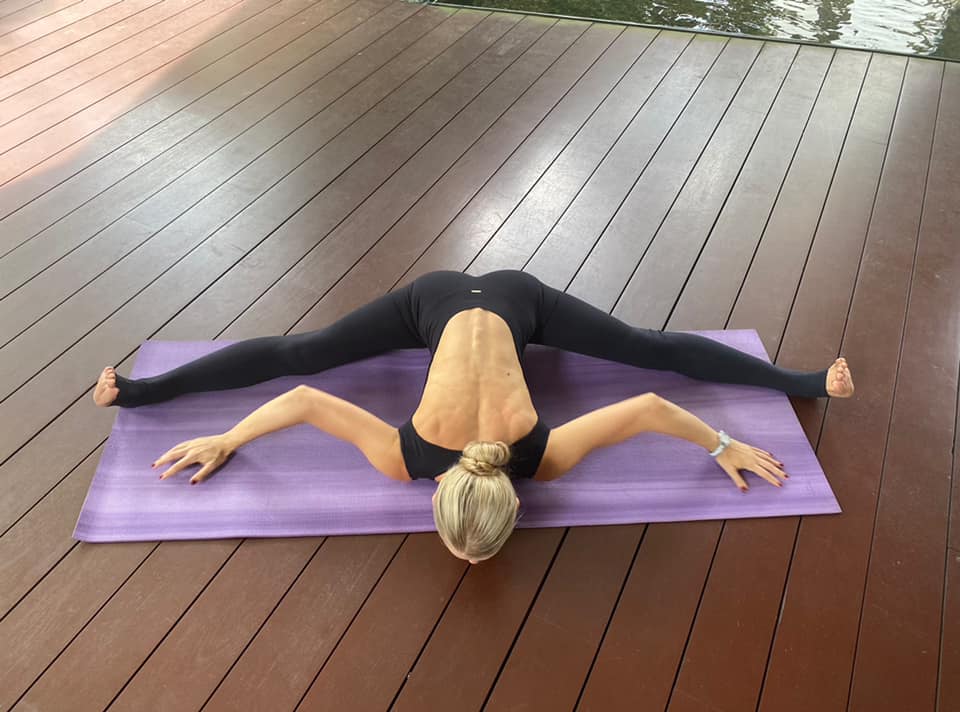
Common seated forward bends shown in the photos:
Upavishta Konasana
Paschimatanasana
Janu Sirsasana